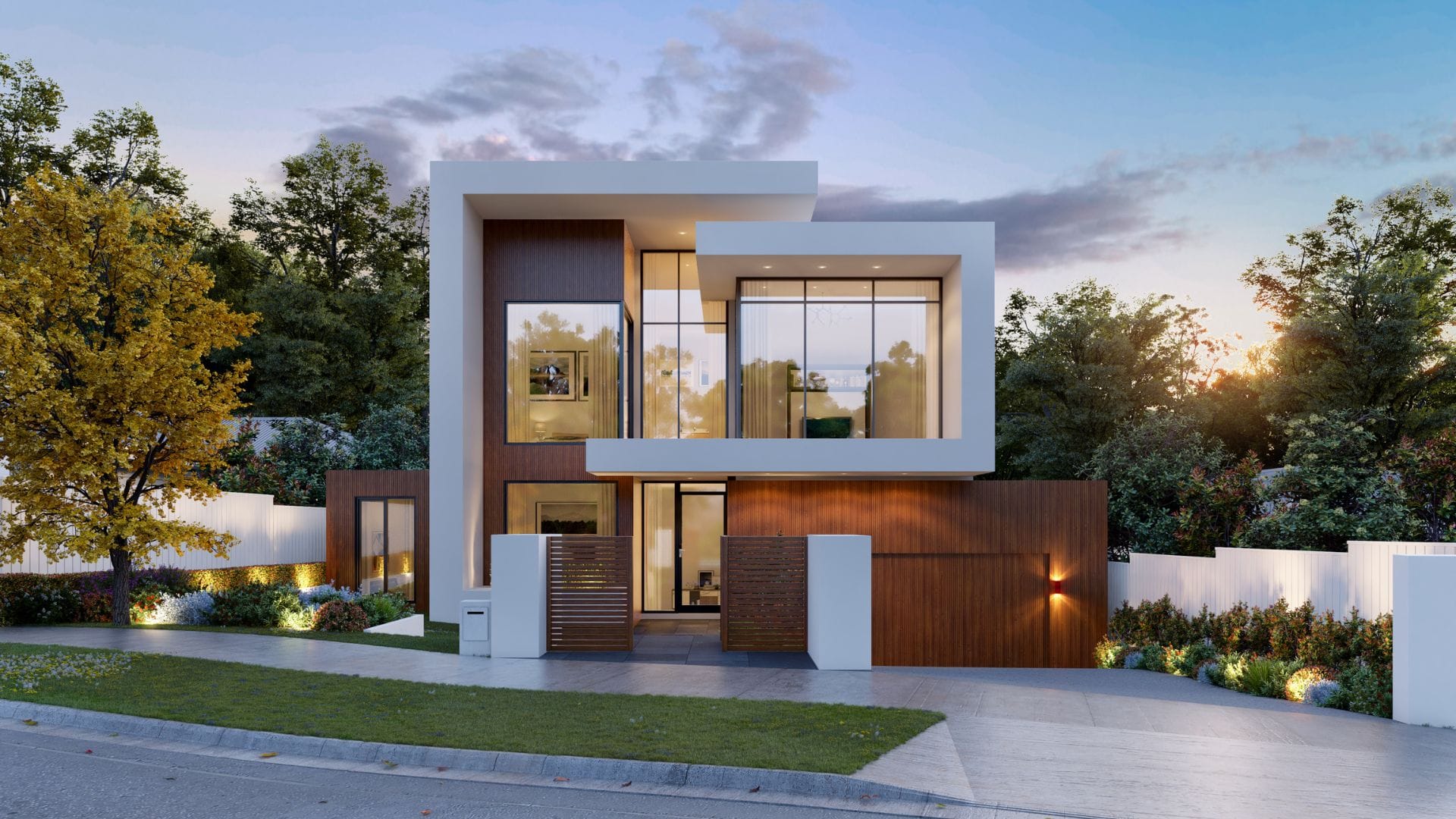
A professionally produced 3D real estate animation can cost anywhere from a few thousand US dollars for a short, tightly scoped sequence to tens of thousands for a detailed property film covering multiple interiors, exteriors, landscaping and post-production. There is no reliable flat rate because two animations of the same length can require very different amounts of modelling, art direction and rendering.
For budgeting purposes, current public 2026 studio guides place relatively straightforward architectural animation around the lower thousands per finished minute, while detailed or cinematic productions can reach US$15,000, US$20,000 or considerably more per minute. Broader architectural visualization guides publish project budgets reaching US$50,000 and above. These figures are market references, not standardized prices.
The most accurate quote therefore starts with the property, the available design information and the intended marketing use.
3D Animation Cost at a Glance
The following bands are useful for early planning. They are a synthesis of public 2026 studio pricing rather than a formal industry tariff. Actual proposals may sit outside these ranges.
| Typical scope | Approximate planning budget |
| 15 to 30-second focused teaser using well-prepared assets | US$2,000 to US$5,000 |
| 30 to 60-second standard property animation | US$5,000 to US$15,000 |
| 60 to 90-second developer marketing film with several scenes | US$10,000 to US$25,000 |
| 90 to 180-second complex development presentation | US$20,000 to US$50,000+ |
| High-end cinematic production, major masterplan or highly bespoke film | Custom, potentially above US$50,000 |
Public pricing illustrates how wide the market is. One 2026 architectural animation guide publishes approximately US$2,000 to US$20,000 or more per finished minute. Another studio lists US$6,000 to US$15,000 for a typical 60 to 90-second launch film. Broader animation providers publish US$10,000 to US$50,000 or more for architectural visualization and roughly US$15,000 to US$50,000 or more for one to three-minute architectural walkthroughs.
Those numbers should tell buyers one thing immediately: runtime alone is a poor way to predict the final invoice.
Why Can Two 60-Second Animations Cost Completely Different Amounts?
A minute of finished video tells you how long somebody watches. It does not tell you how much material had to be created.
Consider two hypothetical 60-second briefs.
The first covers one completed apartment interior. A clean 3D model already exists, finishes are approved, furniture references are supplied and the camera passes through four connected spaces under one daylight setup.
The second covers a mixed-use development. It begins with an aerial site view, moves through landscaped public space, enters a residential lobby, presents an apartment, transitions to a rooftop amenity and finishes with a twilight exterior.
Both are 60 seconds.
The second production contains far more unique geometry, vegetation, furniture, lighting conditions, camera setups and environmental work. Each new scene adds preparation before the animation is rendered.
That distinction between finished duration and unique production scope is central to understanding architectural animation pricing.
What Are You Actually Paying for?
3D animation is usually the final output of several separate production stages.
A property film may require architectural model preparation, scene building, materials, lighting, landscaping, furniture, camera planning, preview animation, high-resolution rendering, editing, colour adjustment, titles, music and final exports.
Autodesk’s architectural visualization training similarly describes workflows involving materials, lighting, landscaping, entourage, cameras and animation output. Its documentation also shows that moving Revit information into visualization environments can require model organization, material work and scene preparation rather than a simple one-click conversion.
This matters when comparing quotes.
A proposal that says “60-second walkthrough” does not reveal whether custom furniture is included, whether the site needs to be modelled, whether landscaping is detailed, how many revision rounds are available, or whether the price includes sound design and social-media versions.
The deliverable name is only the beginning of the scope.
The Architectural Model Can Change the Price Considerably
Providing a Revit, SketchUp, 3ds Max or other 3D model can reduce some modelling work, but an existing model should not automatically be treated as render-ready.
Architectural models are often created for documentation, coordination or design development. Visualization has different requirements.
A supplied model may need:
- Geometry cleanup
- Removal of unnecessary technical objects
- Correct material assignments
- Higher-detail furniture or joinery
- Landscape development
- Improved facade details
- Neighbouring buildings
- Roads and streetscape
- Balustrades, fittings or decorative elements
- Optimisation for the rendering pipeline
Autodesk’s documentation on Revit-to-rendering workflows specifically discusses organizing and cleaning BIM data, setting up shaders and lighting, and preparing geometry for visualization environments.
Clean inputs reduce uncertainty. Incomplete inputs transfer additional interpretation work to the visualization studio.
For an animation commission, it helps to provide current plans, elevations, sections, schedules, relevant CAD or BIM files, finish references and a clear record of which design decisions have been approved.
Project Scale Matters, but Scene Count Often Matters More
A larger building does not automatically mean every animation will cost more than a smaller one.
What matters is how much of the development appears on screen and at what level of detail.
A large apartment tower shown mainly through three exterior camera moves might require less production than a luxury house animation that passes through a highly detailed kitchen, living room, bedrooms, bathrooms, pool area and landscaped garden.
For cost planning, distinguish between the size of the property and the number of unique visual environments required.
Each additional environment may need its own objects, material decisions, lighting, landscaping and camera treatment.
That is why a useful animation brief should identify priority spaces rather than requesting that every area appear equally.
Marketing rarely needs an exhaustive digital tour of every corridor and utility room.
Does a Longer 3D Animation Always Cost More?
Usually, but not in direct proportion to runtime.
Once a detailed scene has already been created, adding another camera angle within that same approved environment can require less work than building an entirely new scene.
A 30-second animation showing five unique locations could therefore require more production than a 60-second animation using two well-developed environments.
Rendering still increases with additional footage.
At 30 frames per second, one minute of animation contains 1,800 individual frames. If a frame takes two minutes to calculate, that represents 60 hours of render computation before considering failed frames, corrections or additional passes. A frame taking ten minutes increases the same sequence to 300 render hours.
Studios can distribute rendering across multiple machines or external infrastructure, so computation time does not necessarily equal delivery time. It still represents a production resource that must be considered.
The practical lesson is to ask how many unique shots and environments are required, not just how many seconds.
Photorealism Has a Cost Beyond Better Textures
For property marketing, photorealism is created through the interaction of many decisions.
Materials need appropriate scale, surface behaviour and detail. Glass needs believable reflections. Timber boards should have plausible dimensions. Furniture needs to sit naturally within the room. Planting must relate to the climate and landscape design. Artificial and natural lighting need to behave consistently with the architecture.
Motion makes errors easier to notice.
A weak corner in a still image can sometimes remain outside the selected composition. An animated camera may expose the same geometry across hundreds of frames and several changing angles.
This means detailed animation often requires more complete scene development than a single still render.
Higher realism may therefore increase:
- Asset preparation
- Material development
- Lighting refinement
- Environment detailing
- Quality-control time
- Rendering demand
- Post-production work
The appropriate level of realism should follow the campaign purpose. A design-review animation and a major off-plan sales launch may not need the same treatment.
Interior, Exterior and Aerial Sequences Have Different Cost Profiles
Interior scenes concentrate detail into relatively small areas.
Kitchen joinery, lighting fixtures, upholstery, decor, appliances, flooring, tapware and furniture can all sit close to the camera. Small inaccuracies become visible quickly.
Exterior production shifts the workload.
The building may require detailed facades, glass, planting, roads, pavements, neighbouring context, vehicles, sky conditions and site furniture.
Aerial sequences add another issue: the camera can see much more of the surrounding environment at once.
A large masterplan flyover may therefore need extensive context that would never appear in a ground-level interior sequence.
Combining interiors, exteriors and aerial shots in one film usually increases the number of unique environments and consequently the budget.
People, Traffic and Moving Elements Can Add Hidden Complexity
A quiet camera move through an empty architectural environment is technically different from a populated scene.
Animated people, moving cars, water, curtains, trees, screens, doors or other dynamic objects require additional setup.
The difference becomes larger if those elements interact with the environment.
A few distant people used for scale are simpler than close-up lifestyle characters. Cars passing through a distant road are different from choreographed arrival sequences. Basic pool water is different from a detailed water simulation.
These details should be discussed during quoting.
Otherwise, phrases such as “make it feel active” or “add some lifestyle” can turn into substantial additional work after production has begun.
Revisions Can Be Cheap Early and Expensive Late
Animation production becomes progressively less flexible as it moves toward final rendering.
Changing a camera path during an early preview is relatively manageable.
Changing the architecture after a final sequence has been rendered can involve updating the model, correcting materials, testing the shot again, producing the affected frames again and repeating post-production.
For property developers, this is particularly relevant because visualization often begins while design work is still moving.
A sensible approval sequence might include:
- Confirm architectural information and priority spaces.
- Approve the proposed shot list or storyboard.
- Review camera paths using low-detail previews.
- Approve major materials and scene styling.
- Review lower-resolution animation previews.
- Authorise final rendering.
- Review editing, graphics and audio.
The purpose is not bureaucracy. It is to make expensive decisions later in the pipeline less likely.
Rendering Method Also Influences the Budget
Architectural animations can be produced through different technical pipelines.
Traditional offline rendering focuses heavily on calculating individual frames at high visual quality. Real-time engines can produce frames differently and may be particularly useful for interactive visualization, rapid iteration or projects where the scene will later support additional formats.
Autodesk describes real-time workflows where architectural models are prepared and moved into visualization environments for materials, lighting and interactive presentation.
Neither method is automatically cheaper.
A real-time scene may require substantial asset optimisation and setup before useful output is produced. An offline workflow may demand more render computation but fit an established photorealistic production pipeline.
The appropriate method depends on the required visual quality, deadline, reuse plans and technical deliverables.
Clients generally do not need to select software themselves. They do need to specify what the final animation must achieve.
Resolution and Delivery Versions Affect the Quote
A single 1920 × 1080 master file may be sufficient for a website or presentation.
A property campaign may require considerably more:
- 4K master
- 16:9 website version
- 9:16 vertical social edits
- 1:1 or 4:5 advertising versions
- Short teaser clips
- Silent showroom loops
- Versions with and without text
- Alternate logos or campaign branding
- Different language versions
- Still frames extracted for marketing
The additional cost may be modest if these versions are planned before editing.
Requesting them after the project has been archived can create avoidable rework.
Developers should therefore treat delivery formats as part of the original brief rather than an afterthought.
Australia vs United States: Should the Budget Be Different?
There is no reliable rule that an Australian architectural animation should cost a fixed percentage more or less than the same work in the United States.
Public 2026 pricing research shows substantial variation within each market and between local, international and distributed production teams. One current cross-market guide places standard-quality architectural animation in both Australia and the United States within similarly broad ranges, which reinforces how strongly individual scope affects price.
The more practical distinction is quoting currency and commercial scope.
Australian developers will often compare proposals in Australian dollars, while US teams typically budget in US dollars. International visualization studios may quote either.
Do not compare the converted headline figure alone.
Compare:
- Included modelling
- Number of environments
- Animation duration
- Revision allowance
- Resolution
- Still-image derivatives
- Sound and editing
- Delivery formats
- Source-file policy
- Design-change policy
- Timeline
- What is explicitly excluded
Two quotes with a 30 percent price difference may represent substantially different deliverables.
Per-Second Pricing Can Be Useful, but It Can Also Mislead
Some animation providers quote a price per finished second or per finished minute.
This provides a convenient starting point, especially after the 3D environment already exists.
It becomes less useful when comparing completely different projects.
A 10-second aerial sequence requiring a detailed masterplan can involve more scene-building work than 20 seconds inside an already completed apartment model.
Fixed project pricing can therefore be easier for property developers when the deliverables are clearly documented.
A strong fixed quote should identify what assumptions have been made about:
- Available models
- Architectural detail
- Number of shots
- Runtime
- Furniture
- Landscape
- Context
- Dynamic objects
- Revisions
- Rendering quality
- Post-production
The number becomes meaningful only when those assumptions are visible.
How to Reduce 3D Animation Cost Without Making It Look Cheap
Reducing production waste is usually more effective than simply asking for lower rendering quality.
Start by deciding what needs to appear.
A 60-second film with a focused sequence often communicates a development more effectively than a longer animation containing repetitive camera moves.
Reuse approved visual assets where possible. If exterior and interior still renders have already been developed for the same campaign, some models, materials and styling decisions may be reusable for animation.
Provide complete design information early.
Approve camera movement before high-resolution rendering.
Group feedback from architects, developers, marketing teams and other stakeholders into coordinated revision rounds rather than sending conflicting comments separately.
Avoid producing every output at maximum resolution when it has no practical distribution requirement.
Finally, plan derivatives early. A carefully designed master sequence can support short edits, social clips and website footage without creating each asset as an unrelated commission.
When Is 3D Animation Worth Paying For?
Animation is most defensible when movement communicates something that still images cannot communicate as clearly.
Examples include:
- The arrival sequence of a development
- Movement through connected interior spaces
- The relationship between several amenities
- A large masterplan
- Changing viewpoints around complex architecture
- A property that cannot yet be filmed
- A staged launch requiring multiple video formats
For a simple property where the marketing requirement is limited to several strong exterior and interior views, still architectural renders may provide better value.
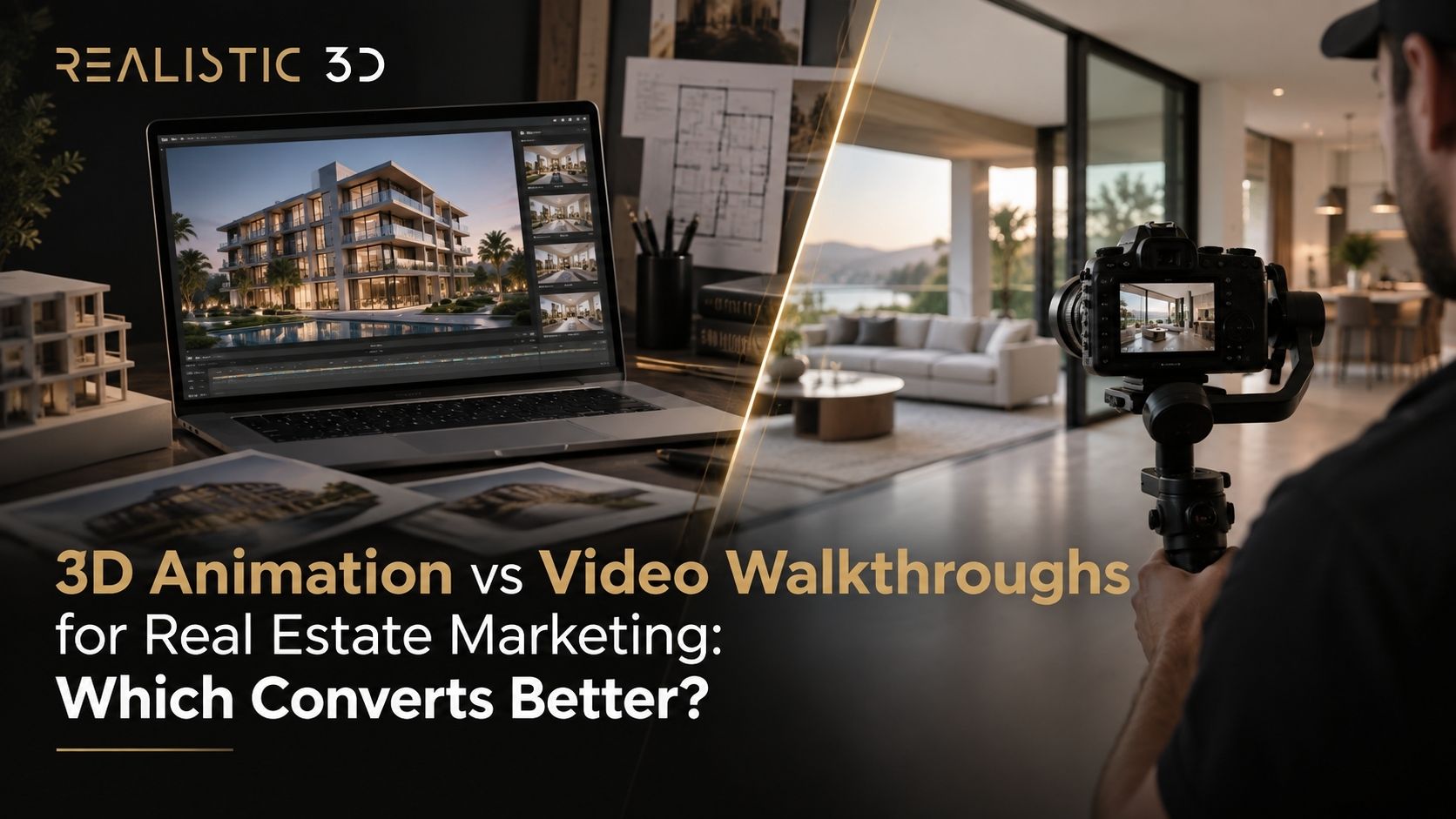
For an existing completed property, professional photography or filmed walkthrough video may also make more commercial sense.
Interactive 360-degree tours and real-time experiences solve another problem again because users control part of the viewing experience.
Choosing animation because it looks impressive is not enough. The format should solve a communication or marketing problem that justifies the additional production.
How to Compare 3D Animation Quotes Properly
Before choosing a provider, normalize the proposals.
Ask every studio to quote against the same brief.
Then compare four areas.
Scope
Are the same spaces, shots and environments included?
Quality
Does the portfolio demonstrate the level of architecture, materials, lighting, camera direction and realism required for this specific project?
Process
Are previews and approval stages clear? Who manages design updates? How many revision rounds are included?
Deliverables
Does the proposal include the required resolution, audio, graphics, aspect ratios, still frames and campaign cutdowns?
A lower quote is useful only if it includes what the campaign requires.
A higher quote is justified only if the extra work contributes something relevant, such as better architectural detail, stronger art direction, more environments, additional deliverables or lower production risk.
Price should be interpreted alongside scope.
Building a Realistic Animation Budget
A property team can reach a useful early budget before requesting formal quotes.
Start with five pieces of information:
- Property type and scale: house, apartment development, commercial property, masterplan or another project.
- Required locations: exactly which interiors, exteriors and amenities need to appear.
- Available design files: plans, CAD, BIM, Revit, SketchUp, schedules and visual references.
- Marketing objective: development launch, pre-sales, investor presentation, design communication or another use.
- Deliverables: runtime, resolution, orientation, audio, versions and deadline.
With those decisions documented, a studio can assess the actual production rather than pricing an ambiguous request for “a 3D walkthrough.”
For early planning, a focused marketing animation may sit within a few thousand dollars. A multi-scene development film commonly moves into five figures. Large, highly detailed or cinematic productions can move substantially beyond that.
The final number is shaped by what has to be built, reviewed and rendered before the finished video exists.
How much does a 60-second 3D real estate animation cost?
A 60-second architectural animation can commonly fall somewhere between roughly US$5,000 and US$15,000 for professional marketing work, but that should be treated only as an initial planning range. Current public studio guides vary considerably, and complex developments can exceed it. The number of unique scenes, available models, realism, landscaping, revisions and rendering requirements matter as much as duration.
Is 3D animation priced per second or per project?
Both pricing methods are used. Per-second or per-minute pricing can work when the scene and quality level are already defined. Fixed project quotes are often easier to evaluate for property development because modelling, landscaping, interiors, revisions and additional outputs can be written into the scope rather than hidden behind a runtime rate
Does providing a Revit or BIM model reduce animation cost?
It can reduce modelling work, but the saving depends on the model’s condition. BIM data may still require geometry cleanup, material work, optimization, furniture, landscaping and visualization-specific detailing before rendering. A complete, current model with clear finish information is generally more useful than an outdated model that requires substantial correction.
Is a 30-second animation half the cost of a 60-second animation?
Not necessarily. Scene development creates a substantial part of the cost. If both animations require the same building model, materials, landscaping and lighting, extending an approved sequence can cost less than creating an entirely new environment. Conversely, a short film containing many unique scenes can be more expensive than a longer film using repeated environments.
Does 4K architectural animation cost more than Full HD?
It can. Higher-resolution output increases the number of pixels calculated for each rendered frame and can increase rendering, storage and processing requirements. The effect on the final quote varies by workflow. If the animation will mainly appear on websites or mobile advertising, discuss whether every campaign version actually requires a 4K render.
How can property developers reduce animation costs?
Limit the film to spaces that matter commercially, supply accurate design files, finalize materials before rendering, approve camera paths using previews, consolidate stakeholder feedback and identify all required formats before production. Existing visualization assets may also be reusable if they were created to a suitable standard and remain consistent with the current design.
Is 3D animation worth the cost for off-plan real estate?
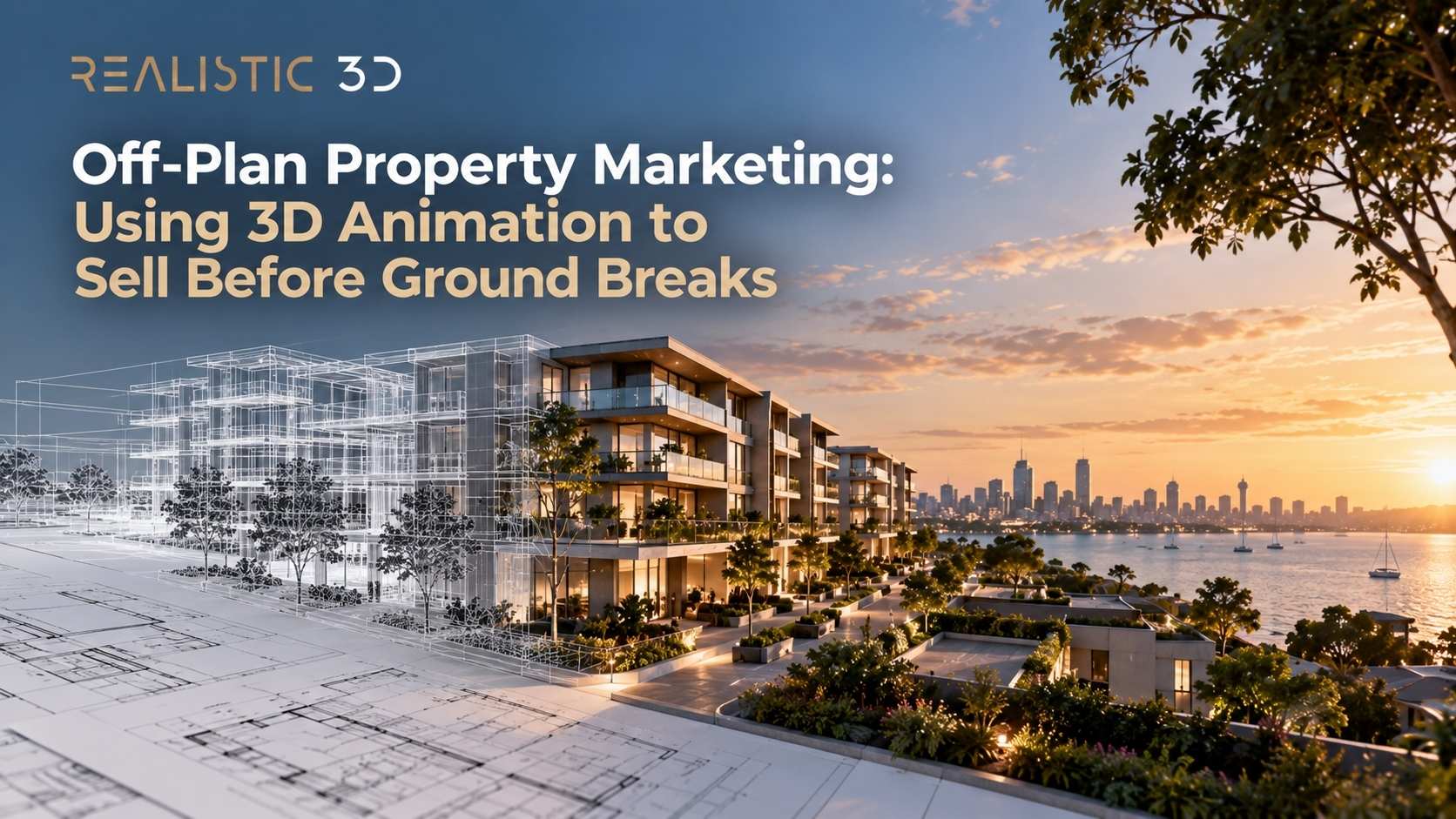
It can be particularly useful for off-plan property because the finished building cannot yet be filmed. Animation can communicate movement through proposed architecture, relationships between spaces, amenities and large development layouts. It is less necessary when a campaign only requires a few specific views that high-quality still renders can communicate effectively.
 Written byshawonWrites for the Realistic3D blog about 3D animation, exterior and commercial rendering, and virtual walkthroughs for property marketing.More from shawon